2014 · e-Zest
Psychology diagnosis assistant
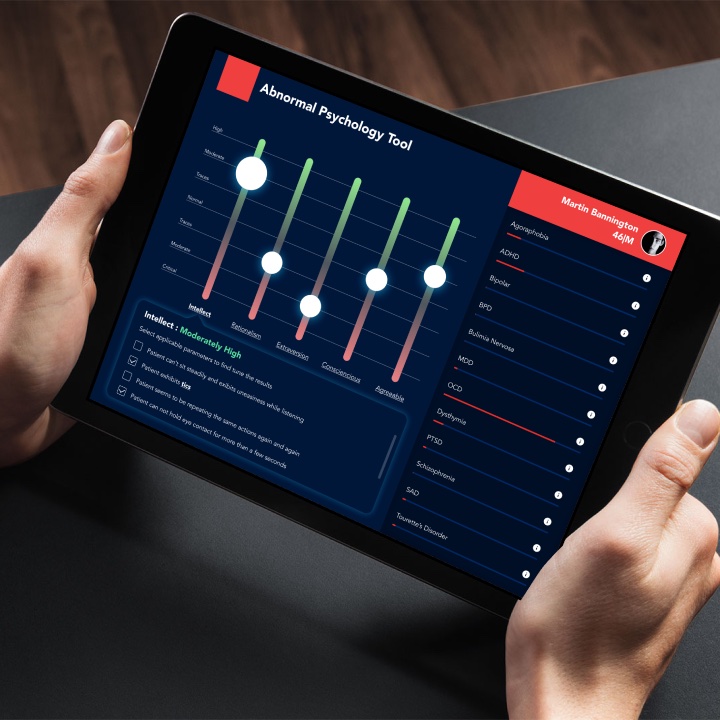
An interactive tablet tool that nudges psychology students towards the right diagnosis, teaching them to weigh the small differences between disorders that look alike from the outside.
My Role
What I did
Introduction
Disorders sit on a spectrum
Teaching the idea of a disorder spectrum, or continuum, is one of the biggest challenges in psychology education. Students tend to get very concrete about disorders and struggle to see that the details often merge seamlessly along a spectrum. The project had to highlight how important it is to notice and weigh specific criteria before diagnosing a disorder.
Problem Statement
Teach diagnosis without the feeling of being taught
The tool was meant to be used by students while they performed a diagnosis. The aim was to help them understand the intricate differences between psychological disorders that seem similar. The concept started from three basic requirements:
Design an interactive tool for psychology students.
Cover the 12 selected abnormal psychology disorders.
Train students by nudging them towards the right diagnosis.
Other considerations
Make it interactive, with a "wow!"
Don't ask multiple-choice questions
Be highly helpful without being intrusive or distracting
Teach the diagnostic process without the feeling of being taught
Use responsive design to deliver a consistent experience across devices
Execution
From theory to a guided diagnosis
Research
The project started with reading and analysing the theory behind all 12 disorders, to understand what they have in common and what sets them apart. I consulted a few students and domain experts to understand the intricate details of the psychiatric world.
OCD (Obsessive Compulsive Disorder) and PTSD (Post Traumatic Stress Disorder) were chosen as the core test case. From the outside they show similar behaviour, but they differ in the finer details.
Hannah, 26
Hannah completed her bachelor's in psychology and is now getting into practice. She is well trained in theory and is starting her career as a psychologist.
Jacob, 56
Jacob mentors many students who want to work in mental health. He likes to support his mentees, but travelling to them is getting harder.
The Five Pillars
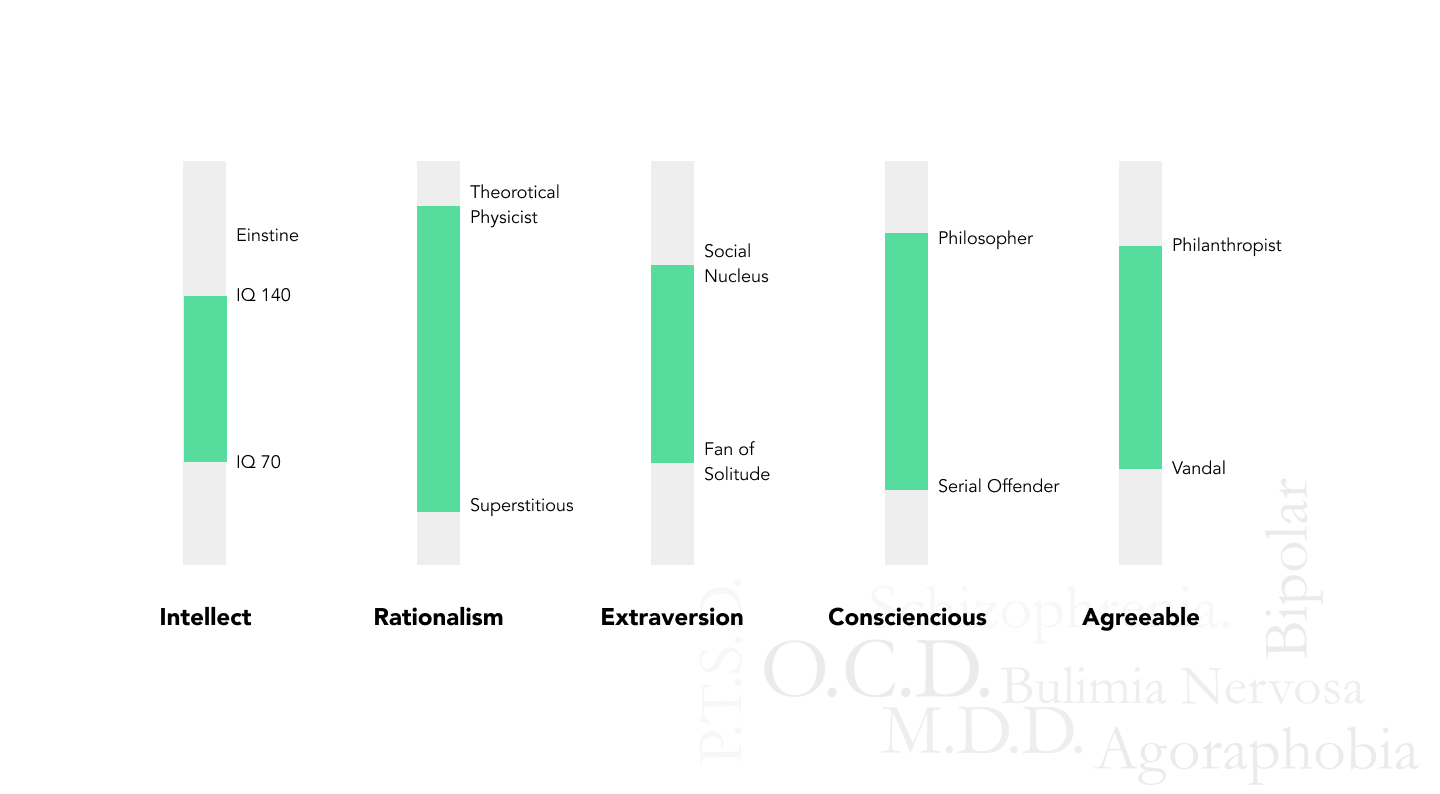
The whole tool was based on an ancient Greek method for judging whether a person was suitable for a high-risk, high-responsibility job, an early form of today's psych evaluation. It describes human personality through five pillars: intellect, rationalism, extraversion, conscientiousness and agreeableness.
The Normal Line
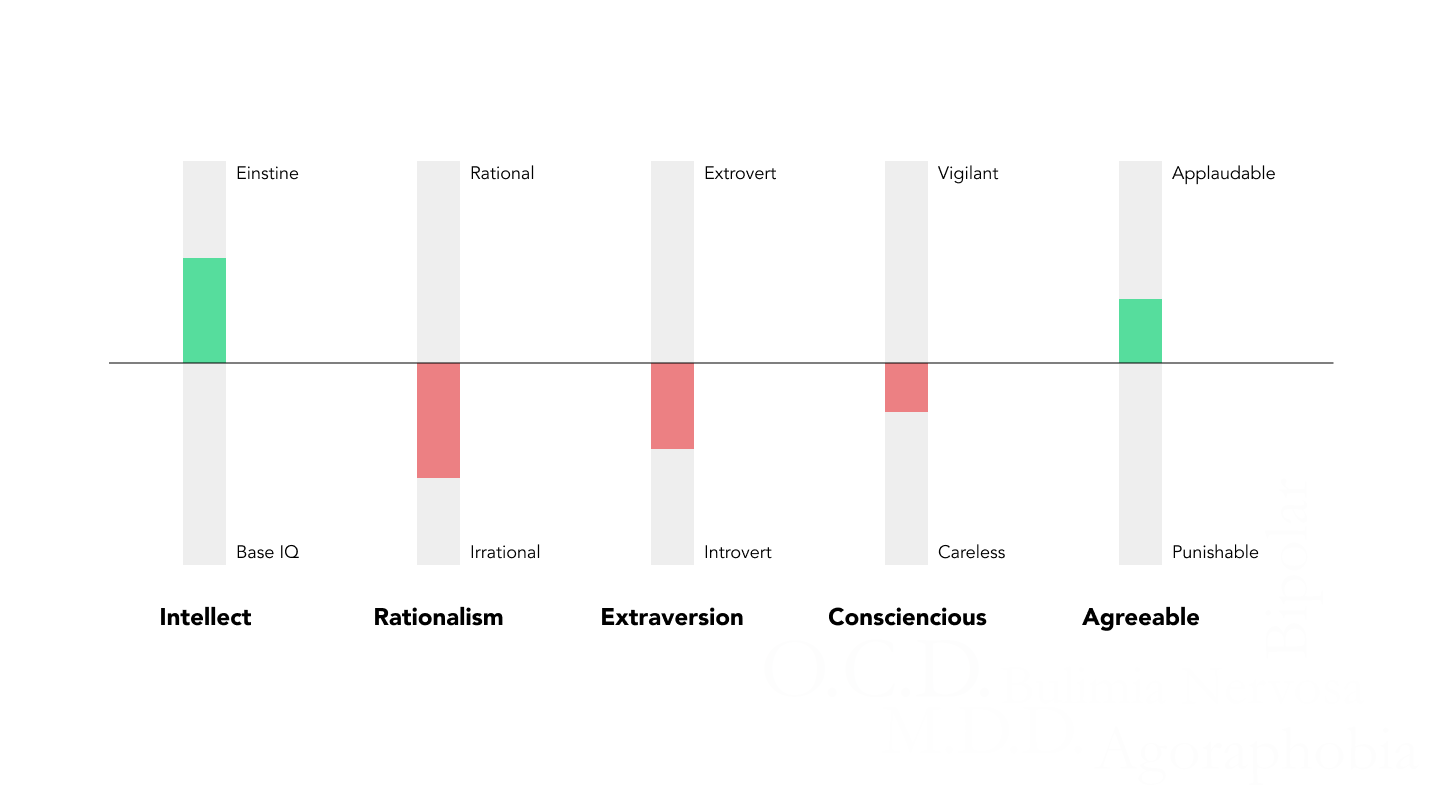
An average was identified for every pillar, and that is where the "normal" line sits. While talking to the subject, students estimate where the subject stands on each pillar through a series of interactive questions. For example, higher SAT scores suggest a higher IQ.
Fine-tuning
A configuration like the one above could mean either OCD or PTSD, and a minor difference decides which one it actually is. So I added a fine-tuning layer to the tool: each pillar has a few follow-up questions that shift the probabilities.
User Flow
A session follows the way a real diagnosis happens, from choosing the patient to comparing the student's conclusion with the tool's.
- Patient list
- Select patient, mostly by appointment
-
Start diagnosis
- Adjust the five pillars based on history
- During discovery, select specific pillars and check or uncheck items
- The charts move based on the selections
- Compare your diagnosis with the tool's
- The data is autosaved for the next visit
- Exit at the end of the session
Probability, Not Answers
In psychology, until a problem is fully diagnosed, every possibility remains open. So instead of giving answers, the tool shows how likely each disorder is.
As the student makes selections during the session, the charts move. This guides them towards asking the right questions, the ones that lead to the final diagnosis.
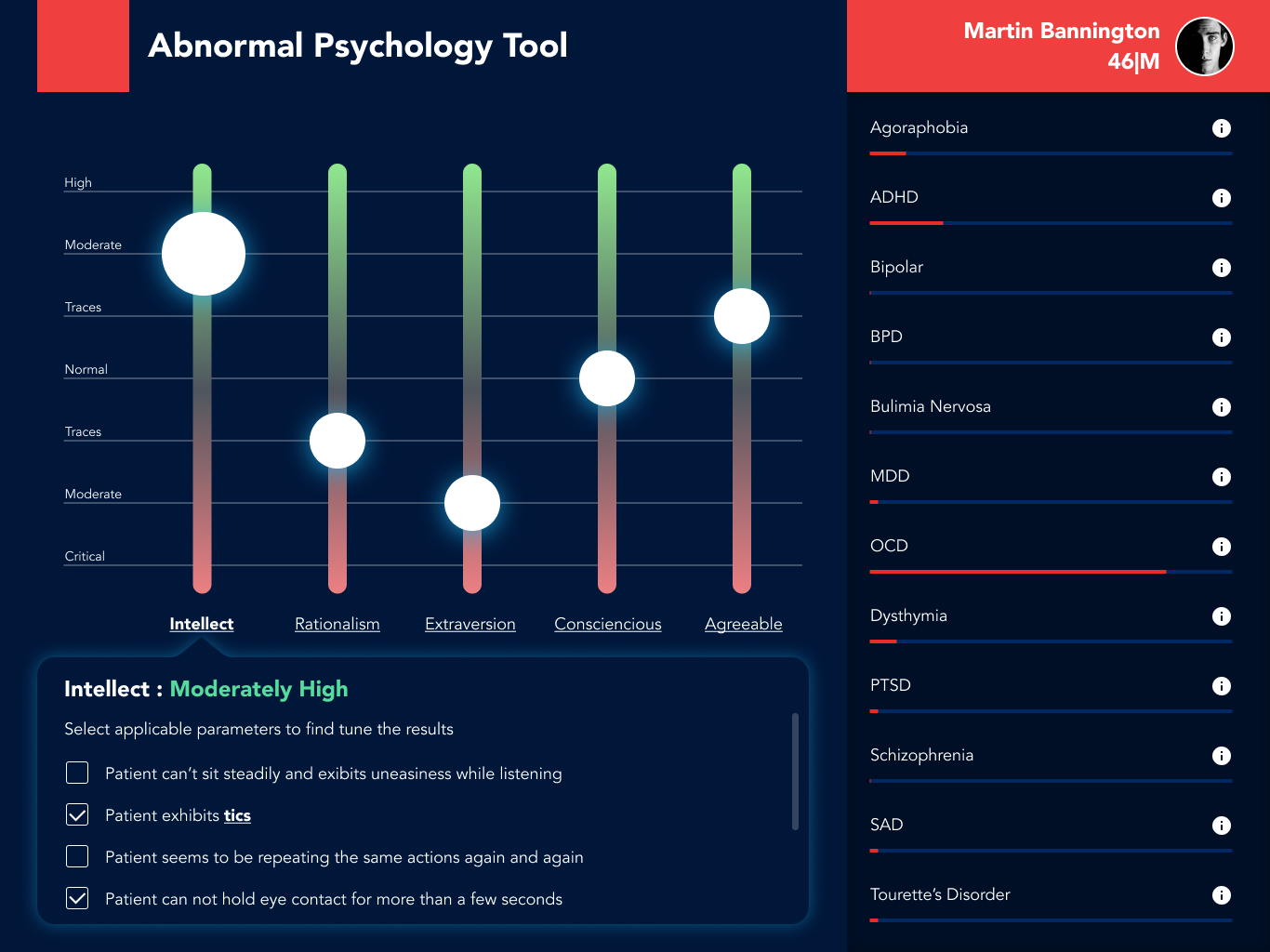
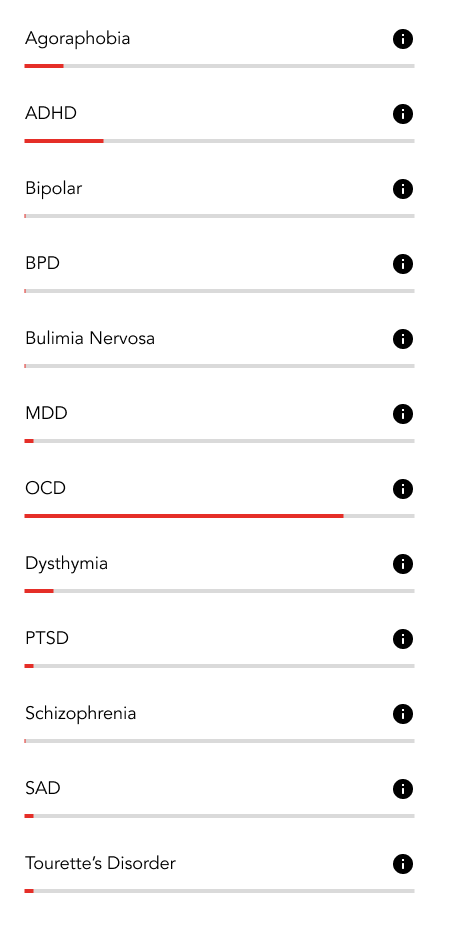
Each disorder carries a live likelihood bar. No disorder is ever ruled in or out by the tool. The student has to keep asking until the evidence points clearly in one direction.
Learning Aids
Students could tap the "i" button next to any disorder to read about it. The meanings of difficult words were also available right there, so learning never pulled them out of the diagnosis.
Done at e-Zest for a reputed educational institute working to improve mental health.